I am a self-confessed heavy YouTube watcher. You could say that I am a bit of an addict! This free-to-upload platform gives anyone the ability to express their individuality, opinions, tips, tricks and experiences at the click of a button and has enormous impact on a multitude of industries. Justin Beiber is a prime example of a young guy simply playing songs on his guitar before being “discovered” and now, according to Forbes (Forbes, 2017), is worth $83.5million! Not bad for a 13 year old simply uploading home-made videos from a bedroom in London, Canada! But let’s not forget that those who are successful at building an active following are also able to monetise their content and build a living from it.
The fact is we can now access video content on almost anything through this platform, from how to bake a cake, make slime (my daughters favourite), re-pressurise a boiler (guilty as charged), play guitar (2020 resolution), and even how to make a YouTube channel! Each creator has the ability to develop their own brand, share their message and create a community through their channels and even launch brands of their own (e.g. Jeffree Star Cosmetics, Tati Beauty, Makeup Geek). With the functionality of commenting and thumbs up-ing a video, conversations, relationships and opinions (both positive and negative) can be shared further developing and enhancing the creators brand.
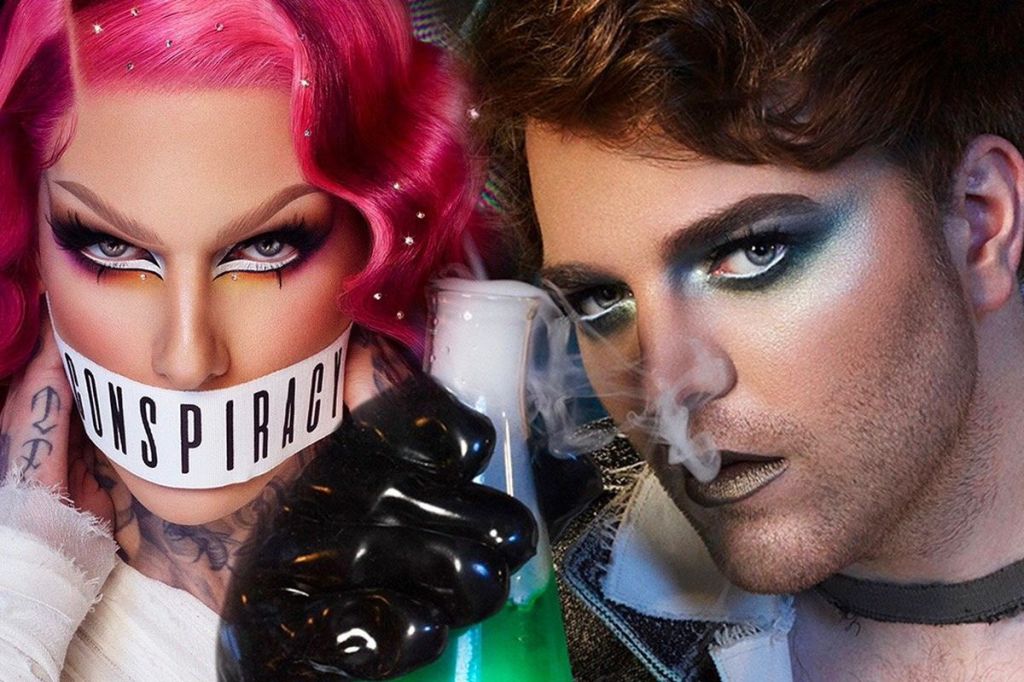
This opens up opportunities in a number of ways. For the purposes of demonstration I’m going to use the beauty community of YouTube to demonstrate this, as D2C (Direct to Consumer) selling has changed the beauty sectors traditional marketing approach (Edited, 2019) as a result of “Influencer” involvement.
In YouTube’s early years a large portion of beauty uploads had a focus on ‘tutorials’; teaching the everyday person how to improve their techniques and application. Then came the rise of the “haul videos” where creators would go and buy a huge quantities of products. This then lead to the rise in “reviews”, where the products purchased would be tested and feedback given for viewer’s interest. This developed a community where potential product purchase decisions were no longer just made on their online star rating, or recommendation from a department store worker or friend. Now consumers can see the application, wear and performance of products before making their purchase from a widely trusted source.
At this point is important to note the scale of Beauty YouTuber followings with a few examples of subscriber numbers:
- Jeffree Star – 17.4million
- James Charles – 16.7million
- NikkiTutorials – 13.2million
- Tati Westbrook – 9.6 million
Through the evolution of YouTubers, they have created an enormous international audience that trust their views and opinions on products; and marketers were quick to take advantage. This has benefits for both the brands and the YouTubers. Brands started to design and send “PR packs” of their new product launches in order to have their products reviewed on YouTube by Influencers, and in return the Influencers would receive free product to facilitate their channel with the very latest ranges from beauty brands.
Of course the desire for the brands is that they receive positive reviews, therefore increasing their sales and success of product launches. However, they also started to create new avenues to reduce the risk of this by:
- Paid sponsorship of their products so Influencers are paid to promote their products positively;
- Affiliate codes for consumers to get a reduced price on products from a brand and Influencers get paid each time their code is used.
This in turn had a negative effect on consumer confidence. If an Influencer they know and trust is now being paid to promote a product are their reviews truly honest? Or are they just saying it’s great because they are being paid to? This development instilled a level of cynicism amongst the audience which works against the brands targets, and with commentary being so public about this, changes need to be made to address this.
NikkiTutorials was the first YouTuber to address this in April 2019 (Dall’Asen, 2019) by implementing a new coding system in her uploads for all products she uses to differentiate between those she purchased, paid for, are from an affiliate company or been sent in PR thus giving complete transparency to her audience. Tati Westbrook on the other hand has been very vocal about never being paid for a product review ensuring her audience have always known and are therefore able to trust that her reviews are genuine and honest, even when they are negative.
Whilst YouTube has the ability to reach vast audiences way beyond the scope of more traditional methods of print and media, the scrutiny is much higher. The cost is also not minimal with Influencers charging $20 for every 1000 followers for a single product placement dependant on their following (Webfx, 2020) plus the cost of the PR set sent to them, so the pros must be sure to outweigh the cons and scepticism. However, with the beauty sector now valued at $532billion and growing (Insider, 2019) Influencers must be doing something very VERY well!
Dall’Asen, N., 2019. Reddit. [Online]
Available at: https://www.revelist.com/beauty-news-/nikkie-tutorials-transparency-code/15108
Edited, 2019. Edited. [Online]
Available at: https://edited.com/resources/what-the-beauty-industry-looks-like-in-the-future/
Forbes, 2017. Forbes – Justin Beiber. [Online]
Available at: https://www.forbes.com/profile/justin-bieber/#6ad7096848b5
Insider, B., 2019. [Online]
Available at: https://www.businessinsider.com/beauty-multibillion-industry-trends-future-2019-7?r=US&IR=T
Webfx, 2020. YouTuber Influencer Marketing Pricing.[Online]
Available at: https://www.webfx.com/influencer-marketing-pricing.html
 Freya Webb goes digital
Hi Freya! great post!
The topic that you have chosen is very interesting and undoubtedly in vogue. Since the beginning of their success, influencers have been criticized for the large amounts of money they generate (some of them) for doing a job that certainly does not seem like a “common” job. However, I believe that the creation of massive communities with the simple use of an amateur video camera is something very commendable. In fact, the examples you have given are great proof of this (the figures are incredible!).
In my opinion, what influencers do is a very millennial form of entrepreneurship and arises from something very natural: the need of having inputs from people with whom they are identified, i.e. real individuals. In addition to conveying confidence, the good thing about Youtube influencers is that the large amount of alternative channels that is offered always brings a niche topic to address, whether you are looking for Minecraft players (e.g. Dan TDM), travelers (e.g. The List Bucket Family) or even treasure hunters in swamps (e.g. DALLMYD)!
Did you discover your own niche hobby via influencers? 🙂
Best wishes,
César
LikeLike
Hi Freya,
I really enjoyed your blog. As a Beauty Therapist by trade, I found the YouTube video fascinating and watched all 16.23 minutes of it! I love watching these YouTubers apply makeup and am always interested in what products they are using. I thought Nikki’s coding system was helpful because I completely agree with you, it’s hard to know whether the vlogger is using it because it’s good or simply because they are being paid to advertise it.
This is an interesting BBC article, which discusses, amongst other things, how vloggers must declare if they have received money for advertising and promoting products. https://www.bbc.co.uk/news/business-43966384
It’s amazing how in a relatively short space of time, these people have become such big influencers. Do you think that this trend is set to continue and that this is the future of makeup advertising?
A really interesting read, thank you.
Gayle
LikeLike
Hello Freya – great post!
First of all I have to say thank god I am not the only Youtube addict!!!
I do like how at the start of this blog you have immediately stated how Youtube has many many positives and is useful (even about boilers) but have also mentioned how it can be very negative in the comments and what people post.
The way you have spoken about promotion of products by huge Youtube stars is also very interesting, I have bought something that my favourite Youtuber promoted and it was awful, which backs up exactly what you are saying about why they are really doing the promotions…£££
In regards to these people having mass amounts of money, I think with anything that has so many people invested and watching, the money will always be a lot just like for football players wages – who pays the most usually gets the player.
I do also personally feel like this is just another form of entrepreneurship and as long as rules are followed and the Youtube community is as safe as it can be I can only sit in my arm chair and continue to watch Youtube video wishing I had their platform/revenue!
LikeLike
Hi Freya,
This is a very good blog post. Its amazing how you can become famous on You Tube by just posting your daily life, make up tutorials,video hauls or showcasing your talent. My favourite makeup influencer is Makeup Shayla. I love a natural and soft glam makeup look and I definitely look forward to her makeup hauls where she showcases the products and give a review on each them by giving a comparison. Make up stores across the world ships products to her including Sephora for her to promote.
The McClure Family is also a very popular You Tube channel which was first started as the McClure Twins until the family introduced their new addition, Jersey. The family is very entertaining and post each stage of their children’s lives.
Technology is very convenient and helps you to market yourself as an individual. The McClure Family now has 1.4 million subscribers who are inspired by the way their kids are raised. Digital Marketing is very effective because it pushes technology even further. For example, YouTubers can market on You Tube and can share their videos on Facebook and use IGTV on Instagram for a wide reach of viewers.
LikeLike