I remember just 20 years ago, that in order to share my life stories and memories the process included taking a roll of film to Boots, having it developed and flicking through the developed pictures with friends and family, keeping my favourites in a physical album and the rest in the paper envelope; and to share our opinions focused around sitting and having a conversation or putting pen to paper and writing actual letters.

The digital space has transformed the way in which we now share our lives, views and opinions, both personally and professionally. Allowing us to network and share experiences and lives with sometimes hundreds or thousands of people at once, not just one to one as per my photo developing process above details, allows more people than ever an insight into the parts of my life that I choose to share, my opinions and interests. However, through the digital nature of sharing, interacting and commenting actually means that we have little control over the extent to which our posts are viewed beyond our own chosen network.
This for me is a double edged sword. We are able to connect and reach out to foster important relationships and build new ones easily, all that is needed is the click of a button. The benefits from this, especially when building professional networks on platforms such as LinkedIn, allow you to virtually connect with potential customers, collaborators and employers/ees and share your professional interest, experiences and expertise without the need to divulge your personal life. The ability to demonstrate and importantly differentiate and segment the various aspects of your life is important. While your friends may be interested in the photo of your children at the park and what you ate for lunch, your professional network isn’t, and likewise your stance on an issue affecting your particular sector is of interest to those in a similar field, but your best friend wont.
It is important from a marketing point of view that similar to how we filter our choices to the appropriate social platform, that marketers filter their messaging to the same, as discussed by George and Paul (Paul, 2020). Content should be of an advertorial nature, both educating and demonstrating expertise to address an issue, and suggesting solutions, targeted just at those with a specific need.
The nature of digital footprints better allows platforms to direct their adverts with increasing accuracy based on user activity history, which in itself raises the question about how much we want our online history to be available and used to marketers’ and indeed other sectors benefit. An example of this was when one day I was daydreaming and searching through Expedia at holidays I would never be able to afford, and almost instantly my Facebook feed was full of 5* all-inclusive holidays. This highlights the fact that marketing can be targeted almost to the second to potential customers, but also demonstrates that it is not always accurate. A moment of searching does not mean that the person will become a customer, and has a high chance of actually irritating the person targeted. This level of transparency and tracking can be useful for a company, but can also intrude into people’s lives in a way that is less than desirable.
However, there is a serious aspect surrounding openness, what people choose to share or not on their social accounts and to whom, and the implications of doing so. The question has been raised and discussed widely as to what is private and what is public. Increasingly as detailed by Podolny (Podolny, 2013)digital media content is being utilised by investigators and insurance companies (to name two) to see whether claims such as personal injury accidents are accurate with court cases using social media content to investigate fraudulent claims. With digital content being developed, shared and being difficult to remove through the functionality of screenshots and screen recording software, and the ease at which it is to share and interact with posts more widely (simply the removal of content from platforms does not mean it is gone forever) it is obvious that it is increasingly hard to edit your digital presence, so the focus must be on the initial creation and focus in the first place.
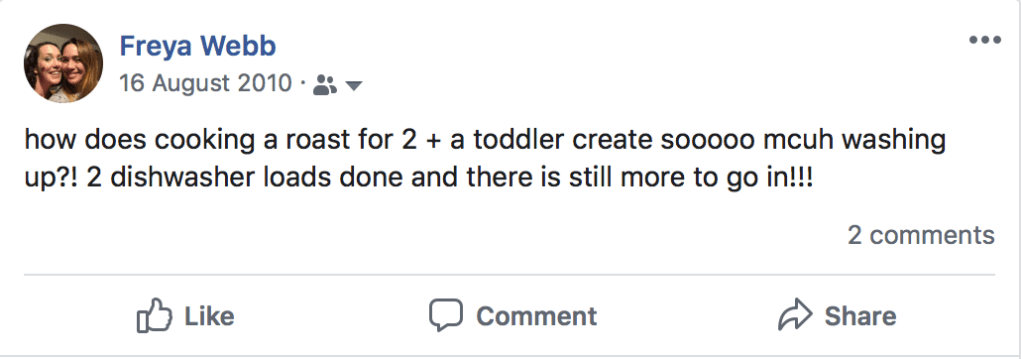
For personal reasons I am increasingly weary of posting in general, despite having been a prolific Facebook poster for many years (yes, I used to post about making a cup of tea or putting on the washing machine…). Yet, I do see the enormous benefit in engaging in the digital space from a professional view for my employer, my career development and ‘personal brand’, from a personal view my interactions are certainly minimal, and I actively share less, as I want as little of my private life and choices to be made accessible from external sources or people unknown to me.
Cup of tea to post online anyone?
References
Paul, B. G. a. J., 2020. Digital Transformation in Business and Society [electronic resource] : Theory and Cases, s.l.: Palgrave Macmillan.
Podolny, R., 2013. Current Trends in Discoverability of Social Media Evidence. Advocates’ Quarterly Like It or Not.
 Freya Webb goes digital